
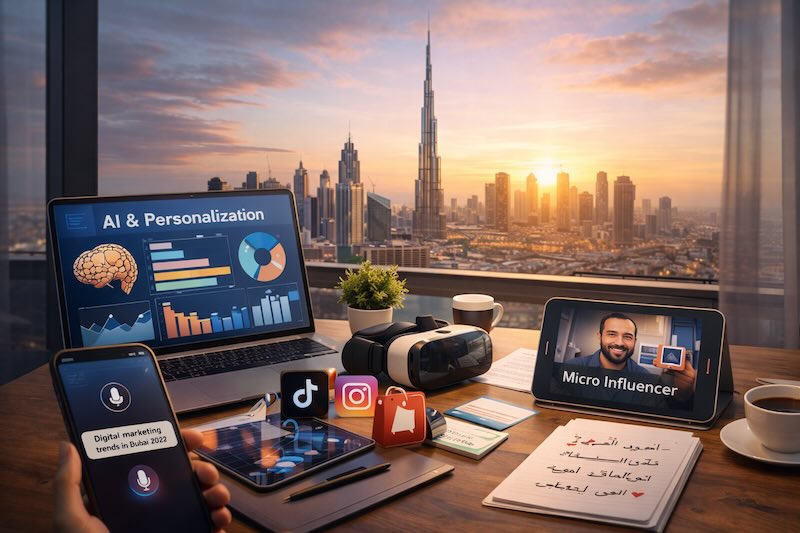
Digital marketing in Dubai for 2026 feels familiar at first glance. AI everywhere. Short videos everywhere. Influencers, data, automation, personalization, all the usual buzzwords. But when you slow down and actually look at how brands are winning here, the picture gets more nuanced. And a bit messier. In a good way.
The Dubai digital landscape has matured. Fast. What worked loudly in 2023 or even 2024 now feels slightly blunt. In 2026, success is less about doing more and more about doing sharper. More local. More intentional. Perhaps more human, ironically, even though much of it is powered by machines.
If 2025 was about adopting AI, 2026 is about trusting it, but not blindly. If short form video was once experimental, it is now non negotiable. And if bilingual marketing used to mean translation, it now means cultural fluency, which is a very different thing.
This guide looks at the most important digital marketing trends shaping Dubai in 2026, based on what is actually ranking, converting, and quietly outperforming competitors. Some of it aligns with what you expect. Some of it might not. I think that tension is where the opportunity lives.
Table of Contents
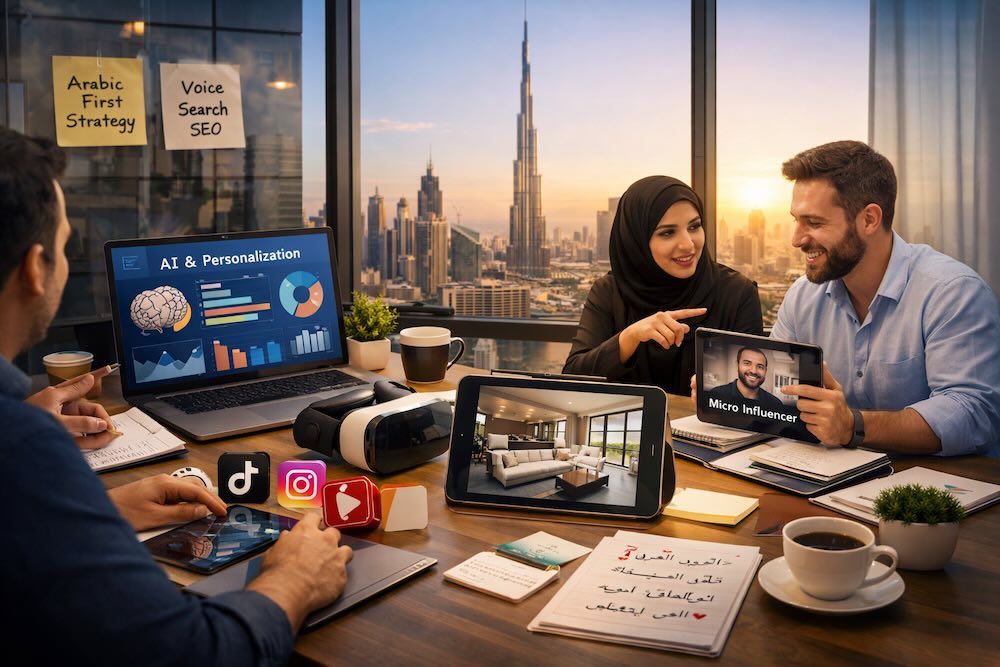
Dubai’s Digital Marketing Landscape in 2026, A Quick Reality Check
Before diving into tactics, it helps to ground ourselves in the environment.
Dubai is not just competitive. It is compressed. Brands from every sector, real estate, luxury retail, fintech, healthcare, education, tourism, all fighting for attention in the same digital spaces. Add to that a population split between Emiratis, long term expats, short term professionals, and transient tourists, and suddenly audience targeting becomes less clean than most global playbooks assume.
Smartphone penetration is near total. Social media usage is among the highest globally. English dominates digital platforms, yet Arabic content still drives deeper trust when done correctly. Data privacy expectations are rising, even if enforcement still feels uneven at times.
And AI powered search results, including AI Overviews, are quietly reshaping how visibility works. Ranking is no longer just about page one. It is about being cited, summarized, and trusted by machines as much as humans.
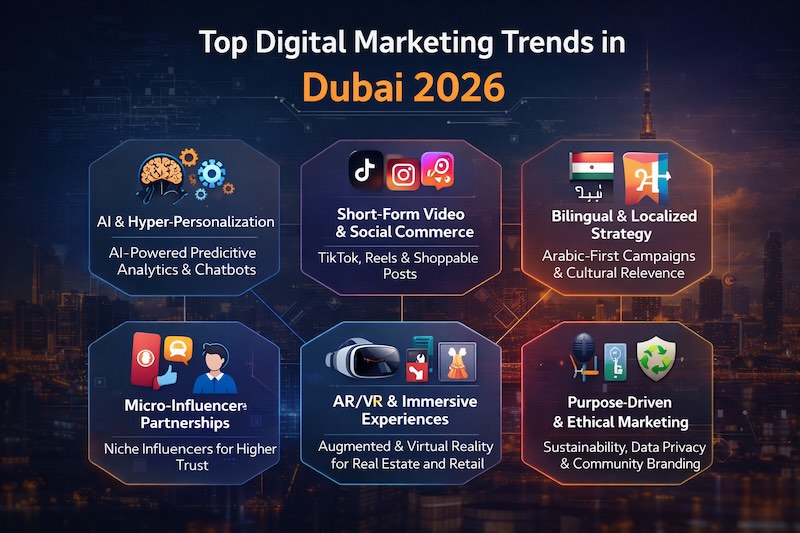
AI Driven Hyper Personalization, No Longer Optional
AI in Dubai marketing is no longer about experimentation. It is infrastructure.
In 2026, the most effective brands are using AI not just to automate tasks, but to anticipate intent. Predictive analytics now guide content calendars, ad spend allocation, email timing, even landing page layouts. And yes, it works, when it is restrained.
The shift is subtle. Instead of blasting segmented campaigns, brands are building adaptive journeys. A visitor from Business Bay browsing real estate listings at night sees a different experience than a family user browsing during the weekend. Not dramatically different, but enough to feel relevant.
Chatbots have evolved too. The clunky scripts are mostly gone. Today’s AI assistants handle Arabic and English fluently, switch tone based on context, and escalate intelligently when needed. That 24 seven presence matters in Dubai, where buying decisions often happen outside standard business hours.
One thing worth noting, and I see this often, is that over personalization can backfire. Users in Dubai are tech savvy. If the experience feels invasive rather than helpful, trust erodes fast. The best implementations feel almost invisible.
If you want a practical example of how this plays out across campaigns, the strategy frameworks used by agencies like 2marketing UAE are increasingly built around intent modeling rather than keyword volume alone.
Short Form Video and Social Commerce Are Colliding
Short form video is not new. But in 2026, its role has shifted from awareness tool to conversion engine.
TikTok, Instagram Reels, and YouTube Shorts dominate engagement metrics in Dubai. But what is interesting is how transactional these platforms have become. Shoppable posts, in app checkout, lead form overlays, all are now normalized user behaviors.
Dubai audiences are visually sophisticated. Polished content still performs well, especially in luxury and real estate. Yet there is also growing appetite for less perfect, more observational videos. A quick walkthrough. A behind the scenes moment. A slightly awkward explanation from a founder. These convert better than they should, honestly.
Brands that win here treat video as a conversation, not a broadcast. They test relentlessly. They post often. They delete what does not work without emotional attachment.
Social commerce is especially strong in fashion, beauty, fitness, and lifestyle services. We are also seeing it creep into B2B, which I would not have predicted a few years ago.
If your funnel still treats social as top of funnel only, it is already outdated.
Arabic First and Bilingual Strategy, Not Just Translation
This is where many campaigns quietly fail.
Bilingual marketing in Dubai used to mean English content with Arabic versions added later. In 2026, that approach feels backwards. The strongest brands now design Arabic first campaigns, then adapt for English.
This is not about language alone. It is about rhythm, references, tone, and values. Arabic content that feels translated is immediately obvious to native speakers. And it signals a lack of commitment.
At the same time, English remains essential, especially for expat heavy sectors like tech, finance, and international education. The challenge is not choosing one language, but aligning both without diluting either.
Voice search has accelerated this shift. Arabic voice queries are longer, more conversational, and more local. Optimizing for them requires different keyword logic and different content structure.
This is one of the reasons why GEO focused SEO, not just generic UAE targeting, is gaining traction. Neighborhoods, districts, and even landmarks matter more than before.
Micro Influencers, Trust Over Reach
The influencer market in Dubai has matured, and perhaps cooled slightly.
Celebrity endorsements still exist, but brands are increasingly skeptical of inflated reach and shallow engagement. Micro and nano influencers, especially those deeply embedded in niche communities, are outperforming bigger names on trust and ROI.
Think fitness trainers with 20k followers. Real estate advisors with loyal LinkedIn audiences. Beauty professionals with small but highly engaged Instagram communities. These voices feel credible. And credibility converts.
In 2026, influencer partnerships are longer term. Less campaign based. More relationship driven. Brands co create content rather than dictate scripts. The results feel more organic, because they are.
This trend aligns closely with purpose driven marketing, which we will explore more deeply in the next section.
AR, VR, and Immersive Digital Experiences Are Becoming Practical
A few years ago, AR and VR in Dubai felt flashy. Interesting, but often impractical. In 2026, that has changed. Not dramatically overnight, but gradually, and now it feels real.
Real estate is the obvious leader. Virtual property tours are no longer a novelty. They are expected. Buyers want to explore layouts, views, even natural lighting at different times of day, before booking a physical visit. This is especially important for overseas investors, which Dubai has no shortage of.
Retail and fashion brands are not far behind. AR try ons for accessories, eyewear, and even clothing are becoming smoother and more accurate. They are not perfect yet. Sometimes sizing feels off. Sometimes colors are not quite right. Still, conversion rates justify the investment.
What is interesting is how these immersive tools are being integrated into SEO and paid media funnels. Landing pages with interactive elements are holding attention longer. Bounce rates drop. Engagement metrics improve. Search engines notice.
From an AIO perspective, immersive content is also more likely to be referenced in AI generated summaries. Rich experiences signal authority and effort, which machines seem to reward.
Voice Search and Mobile First Are Now the Same Thing
Voice search optimization used to be discussed separately from mobile optimization. In Dubai, they are now inseparable.
With smart assistants embedded into phones, cars, and even home systems, voice queries have become part of everyday behavior. And they sound different. More human. More hesitant. More specific.
Instead of typing “best digital marketing agency Dubai,” users say things like, “Who is the best digital marketing agency near me that understands Arabic and English audiences?” That shift matters.
Optimizing for voice means writing content that anticipates questions, not just keywords. It means structuring pages with clear answers, natural phrasing, and strong contextual signals. FAQ sections are no longer filler. They are strategic assets.
Local intent is also amplified. “Near me” searches in Dubai often imply neighborhoods, not just the city. Marina, Downtown, JLT, Business Bay. GEO targeting at this level is giving brands a quiet advantage.
Mobile experience ties into all of this. Pages must load instantly. Forms must be frictionless. Navigation must feel intuitive. If a user struggles for even a moment, they leave. There is little patience left.
Purpose Driven and Ethical Marketing, Subtle but Growing
This trend is quieter, but it is gaining weight.
In 2026, Dubai consumers are paying more attention to how brands handle data, represent communities, and contribute beyond profit. Not everyone. Not always. But enough to matter.
Sustainability messaging is becoming more nuanced. Vague claims no longer impress. Specific actions do. Ethical data use, transparent privacy policies, and respectful retargeting practices are part of brand perception now.
There is also a growing emphasis on community focused branding. Supporting local initiatives. Highlighting real employees. Showing behind the scenes decision making. These elements humanize brands in a market that can sometimes feel overly polished.
This shift aligns well with micro influencer strategies and long form content marketing. It also feeds into trust signals that both users and AI systems value.
SEO, GEO, and AIO in Dubai, How They Intersect in 2026
SEO in Dubai is no longer just about ranking pages. It is about presence across multiple layers of discovery.
Traditional organic rankings still matter, especially for high intent searches. But AI Overviews, featured snippets, map packs, and social search are increasingly intertwined.
To perform well in 2026, content must be structured for machines and humans simultaneously. Clear headings. Semantic depth. Natural language. Consistent entity references. Location specificity.
GEO optimization plays a critical role here. Pages that clearly signal who they serve, where they operate, and what problems they solve are more likely to be surfaced in localized results and AI summaries.
AIO adds another layer. Content that demonstrates expertise, experience, and authenticity is more likely to be cited by AI systems. This is where tone, pacing, and realism matter. Over optimized content feels hollow. Balanced content feels trustworthy.
Dubai Digital Marketing Trends vs Global Benchmarks
| Trend Area | Dubai Market 2026 | Global Average 2026 | Key Difference |
|---|---|---|---|
| AI Personalization | Advanced, intent driven, bilingual | Segment based personalization | Dubai focuses on cultural and language nuance |
| Short Form Video | High polish mixed with authentic content | Mostly raw, creator style | Dubai balances luxury with realism |
| Influencer Marketing | Micro and nano influencers dominate | Mixed macro and micro | Trust outweighs reach in Dubai |
| Voice Search | Arabic and English conversational queries | Primarily English based | Bilingual optimization is critical |
| AR and VR Usage | Mainstream in real estate and retail | Still emerging | Dubai adopts immersive tech faster |
Content Formats Quietly Outperforming in Dubai Right Now
Not all content ages the same way in Dubai. Some formats spike fast and disappear. Others just sit there, quietly pulling traffic, leads, and trust month after month. In 2026, a few formats are clearly punching above their weight.
Long form thought leadership blogs, like this one, are back. Not the stiff, academic kind. The reflective kind. Articles that admit uncertainty, explore trade offs, and do not rush to conclusions. These perform especially well for B2B, real estate, healthcare, and high ticket services. They also feed AI Overviews far better than short, transactional pages.
Scenario based content is another winner. Instead of “Top 10 Tips,” brands are publishing “What happens if…” style content. What happens if you launch Arabic ads without localization. What happens if you rely only on TikTok. These pieces mirror how people actually think.
Hybrid content, part blog, part guide, part opinion, is increasingly effective. It feels less like marketing and more like experience sharing. That distinction matters more than it used to.
There is also renewed interest in founder led and expert led content. Not overly personal. Just grounded. A short perspective from someone who has seen campaigns fail and succeed carries weight. Especially in Dubai, where audiences are skilled at spotting generic advice.
Schema and Structured Data, Still Underrated in the UAE
Schema markup is not exciting. It does not feel creative. But in 2026, it plays a bigger role in visibility than many brands realize.
For this topic, several schema types matter:
Article schema, with clear author signals and updated publish dates
FAQ schema, especially for voice search driven questions
Organization schema, reinforcing brand trust and authority
Breadcrumb schema, improving SERP appearance and crawl clarity
When implemented cleanly, schema increases the likelihood of content being pulled into featured snippets and AI generated answers. It also reduces ambiguity for search engines, which matters in bilingual markets like Dubai.
A small but important detail, schema content must match visible content. Over optimizing or injecting artificial FAQs just for markup often backfires.
Measuring Success in 2026, Metrics That Actually Matter
Vanity metrics still exist. Followers. Likes. Impressions. They are not useless, but they are no longer enough.
High performing Dubai brands are focusing on a smaller, sharper set of indicators:
Engaged session time, not just page views
Return visitors, a strong signal of trust
Assisted conversions, especially from content and social
Search visibility across AI results, not only classic rankings
Attribution models remain imperfect. Most marketers know this. The smartest teams combine data with judgment. They look for patterns, not perfection.
One thing that stands out, campaigns that feel human tend to perform better across metrics, even when they are not the most polished.
Where Many Brands Still Get It Wrong
Despite all this progress, some mistakes keep repeating.
Over automation is one. Just because AI can generate content does not mean it should do so unchecked. Audiences sense emptiness quickly.
Another is treating Dubai as a single audience. It is not. Strategies that work in Downtown may fall flat in Sharjah adjacent areas. Luxury tone that works for international investors may alienate local families.
There is also a tendency to chase every trend at once. AR, influencers, video, AI, voice, ethics. Trying to do everything usually results in doing nothing particularly well.
Focus still wins.
The Direction Ahead, What 2027 Is Already Hinting At
Looking slightly ahead, some signals are already emerging.
Search is becoming more conversational, more contextual, and less predictable. Brand trust will matter more than keyword targeting alone. Community building will quietly outperform aggressive acquisition.
Content that feels like it was written by someone thinking, not selling, will continue to rise. Slightly unfinished thoughts. Careful uncertainty. Real pacing.
Perhaps that is the most interesting part. As technology accelerates, the advantage is shifting back toward restraint.
Final Thoughts
Digital marketing in Dubai in 2026 is sophisticated, competitive, and fast moving. But it is also more thoughtful than before. Less obsessed with hacks. More focused on alignment.
AI is everywhere, yet humanity matters more. Short videos dominate, yet long form content builds trust. Arabic content rises, yet bilingual fluency defines success. Immersive tech grows, yet simplicity still converts.
The brands that win are not the loudest. They are the most aware.
And that might be the real trend worth paying attention to.
Dubai Digital Marketing Trends vs Global Benchmarks
Is AI replacing digital marketers in Dubai?
Not really. It is changing the role. Routine execution is increasingly automated, but strategy, judgment, cultural sensitivity, and creative direction still need humans. If anything, good marketers are becoming more valuable, not less.
Does Arabic content really matter if most users understand English?
Not really. It is changing the role. Routine execution is increasingly automated, but strategy, judgment, cultural sensitivity, and creative direction still need humans. If anything, good marketers are becoming more valuable, not less.
Are influencers still worth the investment?
They are, but only when chosen carefully. Smaller creators with genuine audience relationships outperform large accounts with inflated reach. Long term partnerships work better than one off campaigns.
Is SEO still relevant with AI search and social discovery?
Absolutely. SEO has evolved, but it still underpins visibility. Structured content, entity clarity, and GEO relevance are what help brands appear in AI Overviews, voice results, and local discovery.
What is the biggest mistake brands make in Dubai right now?
Trying to copy what worked elsewhere without adapting it locally. Dubai rewards nuance. Generic strategies struggle.